Construction estimating in New York City has always leaned on drawings, quantity takeoffs, DOB-compliant pricing data, spreadsheets, software, and the professional judgment of experienced estimators. In 2026-27, AI is starting to reshape parts of this process, helping automate takeoffs, analyze drawings, organize cost data, and speed up estimating workflows across the five boroughs.
That said, AI does not replace experienced New York Estimators. AI-generated quantities and pricing still need professional review against drawings, specifications, local construction methods, DOB requirements, and current New York market conditions. For builders, contractors, and developers working across Manhattan, Brooklyn, Queens, the Bronx, and Staten Island, the goal isn’t to hand the process over to a machine — it’s to combine technology with the kind of hands-on expertise that understands how projects actually get built in this city.
At New York Estimators, we believe the future of construction cost estimating in NYC lies in combining AI-assisted technology with professional judgment to deliver faster, more reliable, and better-informed estimates for local contractors and developers.
How Is AI Changing Construction Cost Estimating in New York?
AI is changing construction cost estimating by automating repetitive tasks such as drawing analysis, quantity extraction, plan measurement, document review, and parts of cost-data processing. For New York Estimators juggling tight bid deadlines and dense project documentation, AI can help identify information faster within large, complex datasets — something that matters a great deal when a general contractor is reviewing multiple tenders across different boroughs at once.
Even so, AI-generated estimates still require professional review. Project-specific construction methods, DOB filing requirements, site conditions in tight urban lots, union labor rates, zoning constraints, incomplete drawings, and shifting New York material and labor markets can all affect the final cost.
The most effective approach in 2026-27 is therefore AI-assisted estimating rather than fully automated estimating.
AI handles repetitive, data-intensive work, while experienced New York estimators provide validation, pricing judgment, scope interpretation, risk assessment, and final review.
What Is Construction Cost Estimating?
Construction cost estimating is the process of calculating the expected cost of completing a construction project — whether it’s a brownstone renovation in Brooklyn, a ground-up build in Queens, or a commercial fit-out in Manhattan.
Depending on the project, a New York estimate may include:
- Material quantities
- Material costs (often reflecting NYC-specific supplier and delivery pricing)
- Labor, including prevailing wage and union rate considerations
- Plant and equipment, including site access and hoisting costs common in dense urban environments
- Subcontractor costs
- Waste allowances and disposal, which can be significant in NYC due to local hauling requirements
- Site costs, including staging and logistics in tight urban footprints
- Overheads
- Project-specific allowances
- Construction methodology
- Contingencies
- DOB fees, permits, and other applicable New York City costs
A professional New York Estimate typically begins with project documentation such as architectural drawings, structural drawings, engineering documents, specifications, DOB filing sets, and other relevant information.
The estimator then measures quantities, determines appropriate construction assemblies, applies current pricing, and develops the estimate.

Why Is AI Becoming Important in New York Construction Estimating?
Construction companies in New York operate in an environment where estimating speed, pricing accuracy, and bid competitiveness matter enormously — especially with the volume of tenders moving through the city at any given time.
A contractor may need to review several bids while managing active projects across multiple boroughs. An estimator may have to work through hundreds of drawing sheets and specifications before a submission deadline, all while accounting for DOB requirements that don’t apply the same way anywhere else in the country.
Traditional estimating remains effective in New York, but many of the underlying tasks are repetitive.
For example, an estimator may need to:
- Review drawing sheets
- Identify walls, doors, and windows
- Measure floor areas
- Count fixtures
- Calculate quantities
- Review specifications
- Build assemblies
- Apply labor and material rates specific to the New York market
- Compare subcontractor quotations
- Review exclusions and assumptions
- Check revisions
- Prepare the final bid or BOQ
AI can assist with some of these activities.
Autodesk reported in 2026-27 that AI and automation are increasingly being applied to construction estimating nationwide, particularly around calculating costs, capturing quantities, and supporting estimating teams — a trend that’s reaching New York’s estimating firms as much as anywhere else.
The value isn’t simply “getting an estimate instantly.” The bigger opportunity is freeing up estimators to spend less time on repetitive measurement and more time on analysis, risk identification, and decision-making — which matters even more in a market as fast-moving and high-stakes as New York City construction.
How AI Is Used in Construction Cost Estimating for NYC Projects
AI construction estimating technology can be applied across several areas of a New York project.
1. Automated Quantity Takeoffs
One of the most visible applications of AI is automated takeoff.
Traditional takeoff requires an estimator to review plans and manually measure quantities. Depending on the project, this may involve:
- Linear measurements
- Areas
- Counts
- Volumes
- Wall lengths
- Floor areas
- Ceiling areas
- Door counts
- Window counts
- Concrete quantities
- Roofing areas
- Partition quantities
AI takeoff software can analyze digital drawings and identify certain building components automatically. For example, an AI system may recognize walls on a floor plan and calculate their approximate length, or identify repeated elements across multiple sheets — useful on the multi-unit residential and mixed-use projects common across New York.
This can reduce the amount of repetitive measurement required. However, the output should be treated as an estimating aid rather than an unquestionable final quantity.
RICS specifically warns that AI-generated quantities depend on the quality of the drawings or BIM models provided to the system. Incomplete or inaccurate inputs — not uncommon on fast-tracked New York projects — can result in incorrect quantities and therefore incorrect estimates.
2. AI Construction Estimating Software
AI construction estimating software combines estimating workflows with machine learning, computer vision, document analysis, or other AI technologies.
Depending on the platform, capabilities may include:
- Automated drawing analysis
- Quantity extraction
- Plan recognition
- Document processing
- Cost-data organization
- Specification analysis
- Revision comparison
- Risk identification
- Bid analysis
- Cloud collaboration
- Automated reporting
Not every platform provides the same capabilities. Some products concentrate primarily on AI takeoff, while others combine estimating, project management, BIM, cost databases, or construction management features.
For New York contractors, it’s worth evaluating software against local workflow needs — DOB documentation, borough-specific logistics, and union labor considerations — rather than choosing a platform simply because it advertises “AI.”
3. Automated Cost Estimating
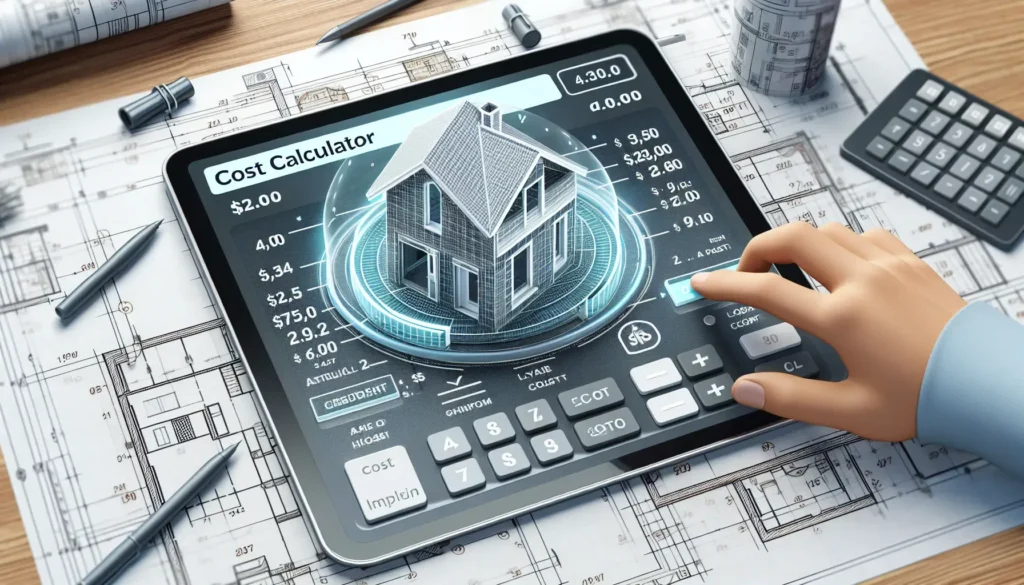
Automated cost estimating goes beyond measuring quantities. Once quantities are available, an estimating system can connect them to assemblies, unit rates, or cost databases.
| Scope | Quantity | Unit | Unit Rate | Estimated Cost |
|---|---|---|---|---|
| Concrete slab | 250 | m² | Project-specific (NYC market) | Calculated |
| Timber framing | 8,500 | kg / applicable unit | Project-specific (NYC market) | Calculated |
| Plasterboard | 1,200 | m² | Project-specific (NYC market) | Calculated |
| Roofing | 380 | m² | Project-specific (NYC market) | Calculated |
The actual unit rates must be appropriate to the project, borough, specification, supplier pricing, and date. This is an important distinction — AI can automate calculations, but it doesn’t automatically know the correct commercial assumptions for a Manhattan high-rise versus a Staten Island residential build. Professional estimating still requires appropriate, locally informed pricing inputs.
4. AI and Real-Time Material Pricing
Material prices in New York can shift because of:
- Supplier changes
- Availability
- Transport and delivery costs into dense urban sites
- Market conditions
- Product substitutions
- Union labor availability
- Project location within the five boroughs
- Lead times
- Quantity discounts
- Exchange rates for imported products
This is where real-time cost data becomes valuable. Instead of relying entirely on an outdated spreadsheet of historical prices, digital estimating systems can make it easier to keep New York cost information current. For example, an estimator preparing a bid could review current supplier quotations and update relevant material rates before finalizing the estimate.

Predictive Cost Estimating and Machine Learning
One of the more advanced applications of AI is predictive cost estimating.
Instead of simply calculating:
Quantity × Unit Rate = Cost
Machine learning systems can potentially analyze historical project data to identify patterns. A system may consider factors such as:
- Previous New York project costs
- Project type
- Building size
- Borough and neighborhood
- Materials
- Labor requirements, including union rates
- Construction methods
- Historical variations
- Project duration
- Market conditions
This enables the use of historical data to support early-stage cost forecasting. For example, a developer considering a new commercial building in Manhattan or Brooklyn may want an early indication of likely construction costs before detailed documentation is available.
AI in Residential Estimating
AI can also support residential estimating. New York residential projects — from brownstone renovations to multi-family buildouts — often contain repeated elements that suit automation.
Examples include:
- Floor areas
- External wall areas
- Internal partitions
- Windows
- Roofing
- Doors
- Flooring
- Painting
- Cabinetry
- Concrete
- Timber framing
- Fixtures
AI-assisted workflows can help identify and measure these components from digital plans. For builders handling multiple residential projects across New York, this can potentially reduce repetitive takeoff work.
AI in Commercial Estimating
Commercial estimating in New York often involves larger drawing sets, multiple disciplines, and more complicated specifications — particularly for office, retail, and mixed-use buildouts.
A commercial project might include:
- Structural works
- Architectural finishes
- Partitions
- Suspended ceilings
- Flooring
- Mechanical services
- Electrical services
- Plumbing
- Fire services
- External works
- Specialist installations
AI can help process large volumes of documentation and identify information faster — valuable when a project involves hundreds of pages of specifications and DOB filing documents. Still, New York commercial estimates require careful coordination between drawings, specifications, schedules, addenda, and tender requirements. An AI system can identify information, but an experienced estimator must determine how that information affects the commercial estimate.
AI in Industrial Estimating
Industrial estimating can involve even greater technical complexity, including projects in New York’s outer boroughs where industrial and warehouse construction continues to grow.
Industrial projects may include:
- Structural steel
- Concrete
- Equipment foundations
- Process areas
- Mechanical systems
- Pipework
- Electrical infrastructure
- Specialist finishes
- Site infrastructure
- Plant installation
AI can help organize and analyze large quantities of project data. BIM models can also provide structured information useful for automated quantity extraction. However, industrial estimating requires a strong understanding of project scope and construction methodology.
AI for Partition and Ceiling Estimates
Partition and ceiling estimate workflows are another area where automation can provide useful assistance — especially on New York office and multi-family interior buildouts.
An estimator may need to calculate:
- Partition lengths
- Wall areas
- Metal stud framing
- Insulation
- Fire-rated assemblies
- Acoustic systems
- Ceiling areas
- Suspension systems
- Bulkheads
- Access panels
- Finishes
AI-assisted takeoff can potentially speed up the measurement of repetitive elements. However, partition and ceiling estimating isn’t simply about measuring square footage — the estimator must also understand the specified system. A fire-rated wall, an acoustic partition, and a standard internal partition can carry very different material and labor requirements, and DOB fire-rating compliance adds another layer that requires professional review.
Automated measurement + correct assembly selection + professional review = a more useful estimate.
BIM Cost Estimating and AI
BIM cost estimating combines Building Information Modeling with cost information. A BIM model can contain information about:
- Building elements
- Dimensions
- Materials
- Components
- Locations
- Relationships
- Specifications
When BIM data is structured correctly, it can support quantity extraction and cost analysis. AI can potentially enhance this process by identifying patterns, checking information, and assisting with data processing — increasingly relevant as more New York developers require BIM deliverables on larger projects.
Cloud-Based Estimating Software
Another important development is cloud-based estimating software. Traditional estimating workflows often relied on files stored locally on individual computers.
Cloud platforms can allow teams to access project information from different locations, depending on the platform and permissions. Potential benefits include:
- Centralized project information
- Easier collaboration
- Version control
- Remote access
- Shared cost databases
- Faster communication
- Digital project records
For New York estimating teams working across job sites in different boroughs, cloud-based workflows can meaningfully improve accessibility. AI can then be integrated into these digital environments to analyze project data and automate selected tasks.

Construction Estimating Automation | What Can Be Automated?
Not every estimating activity requires the same level of human involvement. A useful way to think about AI is to divide the workflow into three categories.
| Estimating Activity | AI Potential | Human Review |
|---|---|---|
| Drawing classification | High | Recommended |
| Basic quantity extraction | High | Essential |
| Repetitive counting | High | Essential |
| Document searching | High | Recommended |
| Cost calculations | High | Essential |
| Revision comparison | Moderate to high | Essential |
| Specification interpretation | Moderate | High |
| Construction methodology | Limited | Very high |
| Risk assessment | Supporting role | Very high |
| Final tender review | Supporting role | Essential |
The purpose of automation isn’t to remove the estimator. It’s to move the estimator’s time toward the activities where professional judgment creates the most value — particularly in a market as complex and code-driven as New York.
AI Estimating vs. Traditional Estimating
| Feature | Traditional Estimating | AI-Assisted Estimating |
|---|---|---|
| Measurement | Manual measurement | Automated measurement with human verification |
| Drawing Review | Primarily manual | AI-assisted document and drawing analysis |
| Data Processing | Spreadsheets and databases | Automated data classification and processing |
| Quantity Takeoff | Manually prepared | AI-assisted quantity extraction |
| Cost Analysis | Historical data and cost databases | Historical data plus predictive analytics |
| Revision Checking | Manual comparison | Automated comparison with human review |
| Pricing | Supplier quotes and estimator experience | Cost databases, real-time data, and professional review |
| Collaboration | Files, spreadsheets, and email | Cloud-based digital collaboration |
| Professional Judgment | Essential | Still essential |
| Best Approach | Experience-driven | AI + experienced estimator |
Key takeaway: AI doesn’t need to replace traditional estimating. The strongest approach for New York contractors combines AI automation with experienced professional judgment for faster and more reliable construction cost estimating.
Can AI Replace New York Construction Estimators?
No — not completely.
AI can automate parts of construction estimating, but complete project estimating requires contextual judgment. Consider a drawing that shows a wall. AI may identify the wall and measure it. But the estimator still needs to determine:
- Which partition type applies?
- What board specification is required?
- Is insulation included?
- Is it fire rated, and does it meet DOB requirements?
- What framing system is required?
- What installation conditions apply on a tight urban site?
- Are there openings?
- Is the quantity consistent with the specification?
- Does the subcontractor quotation cover the same scope?
These questions demonstrate why construction estimating is not simply a mathematical exercise — and why local New York knowledge still matters as much as the technology.
RICS guidance similarly emphasizes that AI outputs should be reviewed and validated by qualified professionals, particularly because AI may lack contextual understanding of site constraints, construction methods, and project-specific requirements.
How AI Can Improve Takeoff Accuracy
AI can improve takeoff accuracy by reducing repetitive manual measurement and helping identify building elements across digital drawings. However, AI does not guarantee 100% accuracy. The quality of the final takeoff depends on several factors:
| Factor | Impact on Accuracy |
|---|---|
| Drawing Quality | Clear and complete drawings produce better results. |
| Scale & File Format | Incorrect scales or unsupported formats can affect measurements. |
| BIM/Model Quality | Incomplete or inaccurate models can lead to incorrect quantities. |
| Drawing Coordination | Conflicts between drawings can create quantity discrepancies. |
| Specification Clarity | Clear specifications help ensure the correct materials and systems are measured. |
| AI Capability | Different AI tools have different detection and measurement capabilities. |
| Project Complexity | Complex or customized designs may require more manual interpretation. |
| Human Review | Professional validation is essential before finalizing quantities. |
Key takeaway: AI can make takeoffs faster and more consistent, but professional review remains essential for reliable construction cost estimating in New York.
A Practical AI-Assisted Workflow
| Step | Process | What Happens |
|---|---|---|
| 1 | Upload Project Documentation | Drawings, specifications, schedules, and relevant project documents are collected. |
| 2 | AI Processes Documents | AI analyzes the documents, identifies relevant elements, and extracts available information. |
| 3 | Generate Automated Takeoff | Quantities are generated for supported scope items. |
| 4 | Estimator Reviews Quantities | The estimator checks AI-generated measurements against drawings and specifications. |
| 5 | Apply Assemblies & Pricing | Appropriate material, labor, and subcontractor rates are assigned, reflecting current New York market conditions. |
| 6 | Review Scope Gaps | Exclusions, assumptions, missing information, and inconsistencies are identified. |
| 7 | Prepare Final Estimate | The completed estimate is reviewed and prepared for tendering or budgeting. |
Key takeaway: This workflow combines AI-driven efficiency with professional estimating expertise, helping create a faster, more controlled, and reliable estimating process for New York projects.
What Are the Benefits of AI in Construction Cost Estimating?
AI-assisted estimating can improve estimating efficiency by automating repetitive tasks and helping teams organize project information more effectively.
| Benefit | How AI Helps |
|---|---|
| Faster Takeoffs | Automates repetitive measurements and helps process large drawing sets more efficiently. |
| Better Data Organization | Structures information from drawings, specifications, and project documents. |
| Faster Bid Turnaround | Reduces time spent on repetitive tasks, allowing teams to process bids faster in a competitive New York market. |
| More Time for Analysis | Allows estimators to focus on scope, pricing, risks, and commercial decisions. |
| Easier Revision Management | Helps compare updated drawings and identify potential changes. |
| Improved Workflow Consistency | Standardized digital processes can create more consistent estimating workflows. |
| Better Access to Information | Cloud-based platforms can make project information easier to access and share securely across job sites. |
Key takeaway: AI can improve estimating productivity, but successful adoption requires appropriate training, system integration, reliable data, and professional oversight.
How Should New York Contractors Choose the Best Construction Estimating Software?
There is no single best construction estimating software for every contractor. The right solution depends on your project type, estimating volume, workflow, and required integrations.
| What to Check | Why It Matters |
|---|---|
| Project Types | Make sure the software supports residential, commercial, and industrial projects typical of the New York market. |
| Drawing Formats | Check compatibility with PDF, BIM, and other drawing formats you commonly use. |
| Takeoff Features | Understand which quantities can be automated and which require manual measurement. |
| AI-Generated Quantities | Make sure estimators can review, edit, and correct automated quantities. |
| Cost Database Integration | Check whether you can use your own material, labor, and supplier pricing, including union rates. |
| Revision Management | Choose software that can help track drawing and scope changes. |
| Team Collaboration | Cloud-based collaboration can help teams work across multiple New York job sites more efficiently. |
| Data Security | Review how drawings, project information, and other sensitive data are stored and protected. |
| Workflow Compatibility | The software should simplify your estimating process rather than create additional work. |
The Future of Construction Estimating in New York
The future of construction estimating is likely to involve increasingly connected digital workflows, with AI becoming more integrated with BIM, digital takeoffs, cost databases, supplier pricing, project management, procurement, scheduling, risk management, document management, and cloud collaboration.
Instead of estimating operating as an isolated process, cost information could flow more efficiently between design, estimating, procurement, and project delivery. This can help New York teams evaluate cost scenarios earlier — such as the impact of changing floor finishes, modifying structural systems, substituting materials, or adjusting project schedules around DOB approval timelines. When project data is properly structured, AI can analyze these scenarios faster, helping construction professionals make more informed budgeting and cost decisions.
AI Will Change the Estimator’s Role
The estimator of the future may spend less time performing repetitive measurements and more time acting as a construction cost analyst and commercial decision-maker.
Instead of spending most of the day manually counting repetitive components, an estimator may spend more time on:
- Scope validation
- Risk analysis
- Value engineering
- Pricing strategy
- Supplier comparison
- Construction methodology
- Bid review
- Cost forecasting
- Client communication
This doesn’t make estimating less important — it makes professional expertise more valuable, particularly in a market where local code knowledge and relationships can make or break a project’s budget.
RICS’ research into AI in construction found that professionals see significant potential for AI across project functions, while actual adoption remains relatively early, with barriers including skills, data quality, integration, and implementation costs.
Why Human Expertise Still Matters in 2026
AI can process enormous amounts of information. But construction is not purely an information-processing problem, and New York projects have more context than most.
A professional estimator may recognize that:
- A drawing conflicts with a specification.
- A quantity appears unusually high.
- A supplier quotation excludes installation.
- A particular material is unavailable locally or facing NYC-specific delivery constraints.
- A construction method creates additional labor on a constrained urban site.
- An allowance is insufficient.
- A scope item has been missed.
- A design revision affects several trades.
These observations come from experience and professional judgment — the kind that comes from years of estimating New York projects specifically.

A Practical AI-Assisted Estimating Workflow for 2026
A strong AI-assisted estimating process can be organized into seven key stages.
| Stage | Workflow | What Happens |
|---|---|---|
| 1 | Document Collection | Collect the latest drawings, specifications, schedules, addenda, and relevant project information. |
| 2 | AI-Assisted Document Review | Use AI technology to identify, analyze, and organize relevant project information. |
| 3 | Automated Takeoff | Generate preliminary quantities for supported scope items. |
| 4 | Professional Validation | Review AI-generated quantities against drawings and specifications. |
| 5 | Cost Application | Apply current material, labor, equipment, and subcontractor pricing for the New York market. |
| 6 | Risk & Scope Review | Identify exclusions, assumptions, inconsistencies, missing information, and potential cost risks. |
| 7 | Final Estimate | Prepare and review the final estimate or BOQ before bid submission or project budgeting. |
Key takeaway: This approach creates a practical balance between AI-driven automation and professional accountability, helping New York estimators work more efficiently while maintaining quality control.
AI vs. Human Estimator: Which Is Better?
The better question is whether they work better together.
| Area | AI | Human Estimator |
|---|---|---|
| Repetitive measurement | Strong | Strong |
| Large-scale data processing | Strong | Limited |
| Drawing recognition | Increasingly capable | Strong |
| Scope interpretation | Limited | Strong |
| Construction methodology | Limited | Strong |
| Pricing judgment | Supporting role | Strong |
| Risk assessment | Supporting role | Strong |
| Supplier negotiation | No | Strong |
| Project context (DOB, borough, site) | Limited | Strong |
| Final commercial judgment | No | Essential |
The future is therefore unlikely to be simply AI versus estimators. It’s more likely to be AI-assisted New York estimators versus estimating workflows that rely entirely on manual processes.
Final Thoughts
AI is transforming construction cost estimating in New York in 2026-27 by automating repetitive tasks such as takeoffs, document analysis, and cost calculations. AI-powered tools can help estimators work faster, analyze data, and improve workflow efficiency.
However, AI cannot replace professional judgment. Accurate estimates still require reliable drawings, current pricing, local construction knowledge, and careful review. The most effective approach combines AI technology with experienced New York estimators.
For builders, contractors, and developers across the five boroughs, AI offers an opportunity to streamline estimating while improving productivity and decision-making. The future isn’t about replacing estimators — it’s about helping them use technology more intelligently.
At New York Estimators, that’s exactly the approach we take: AI-assisted efficiency backed by hands-on, borough-by-borough construction expertise.
Frequently Asked Questions
What is AI construction estimating?
AI construction estimating uses artificial intelligence and related technologies to assist with tasks such as drawing analysis, quantity takeoffs, document processing, cost-data analysis, and forecasting. The exact capabilities vary between software platforms.
Can AI perform construction takeoffs?
Yes. Some AI-powered takeoff systems can identify and measure certain building components from digital drawings. However, the resulting quantities should be reviewed because drawing quality, project complexity, and system limitations can affect accuracy.
Is AI estimating more accurate than manual estimating?
Not automatically. AI can reduce certain repetitive measurement errors, but it can also misinterpret drawings or miss project-specific requirements. The most reliable approach combines automated takeoff with professional review.
Can AI replace a construction estimator?
AI can automate parts of an estimator’s workflow, but it cannot reliably replace the professional judgment required for complex scope interpretation, pricing decisions, construction methodology, risk assessment, and final estimate review — especially in a market as regulated as New York City.
What is predictive cost estimating?
Predictive cost estimating uses historical project data, statistical methods, and machine learning or other analytical techniques to forecast likely project costs or identify cost patterns.
How does AI help residential estimating in New York?
AI can assist with repetitive tasks such as identifying building components, measuring areas, counting elements, and organizing project information. Professional review remains important for customized New York residential projects, from brownstones to multi-family buildings.
How does AI help commercial estimating in New York?
AI can help process large drawing sets, specifications, and project data while supporting quantity extraction and document analysis. Commercial estimates still require careful coordination between drawings, specifications, schedules, and tender requirements.
Can AI help with partition and ceiling estimating?
Yes. AI-assisted takeoff tools can potentially identify and measure partition and ceiling elements. However, the estimator must still verify system types, fire ratings, DOB compliance, acoustic requirements, materials, assemblies, and installation requirements.
What is BIM cost estimating?
BIM cost estimating connects building information models with quantity and cost information. When models contain reliable structured data, BIM can support quantity extraction and cost planning.
What should New York contractors look for in AI estimating software?
Contractors should consider drawing compatibility, takeoff capabilities, cost-data integration, revision management, collaboration, data security, reporting, pricing flexibility, and compatibility with their existing New York estimating workflow.