Steel structure estimating is one of the most critical functions in construction project delivery, yet it remains one of the most misunderstood and frequently undervalued services in the industry. Whether you’re a general contractor bidding a high-rise office tower in Manhattan, a commercial builder pursuing a warehouse project in Texas, a mechanical contractor working on industrial facilities in the Midwest, or a developer managing a mixed-use residential project in California, the accuracy of your steel structure estimate determines whether your project generates profit or becomes a financial liability.
This comprehensive guide walks you through everything you need to know about professional steel structure estimating services across the United States — what they include, why they matter, how the estimating process works, what drives costs in different regions, and how to choose the right estimating partner for your business. Whether you’re new to structural steel bidding or looking to improve your current estimating processes, the principles and insights here apply directly to your work, regardless of geographic location.
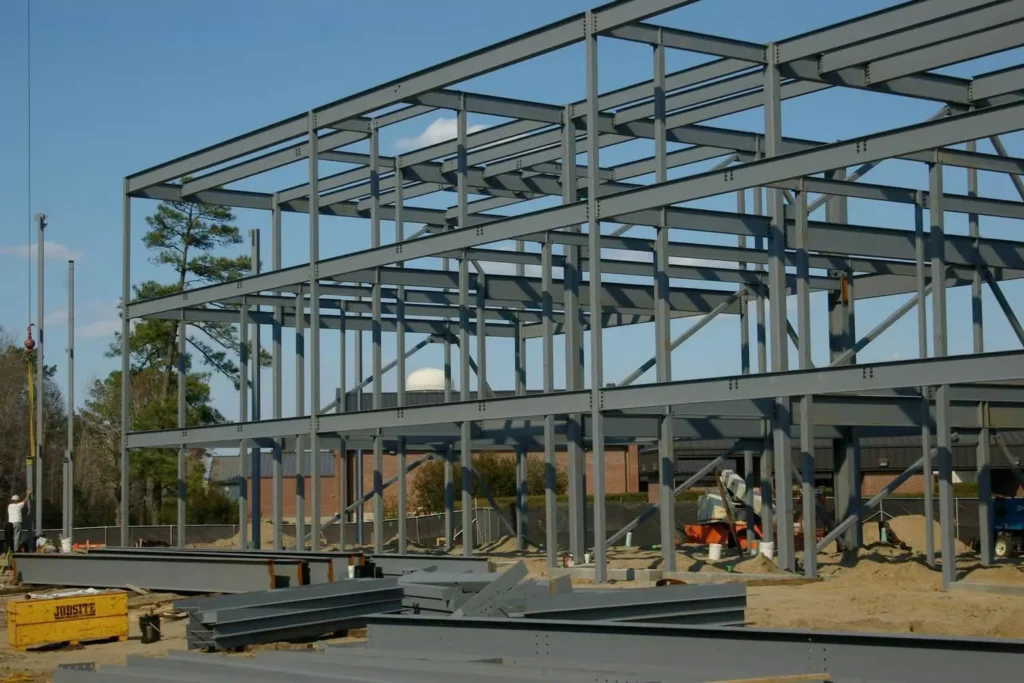
Understanding Steel Structure Estimating | Why It Matters?
At its core, steel structure estimating appears straightforward: measure the tonnage, apply a price per ton, add labor costs, and calculate the total. In practice, professional steel structure estimating is significantly more complex — a specialized discipline that requires deep knowledge of structural engineering, construction processes, market conditions, labor rates, equipment capabilities, and the specific regulatory and logistical requirements of your region.
A steel estimate that is off by even 5 to 10 percent can translate into six-figure project losses on mid-to-large commercial projects. More concerning, systematic underestimation across multiple projects can erode profitability across your entire business and damage your reputation with clients, general contractors, and subcontractors who depend on your accuracy and reliability.
Professional Steel Structure Estimating Services exist to eliminate this risk by combining specialized expertise, current market data, proven methodologies, and quality assurance processes that deliver estimates you can confidently bid and execute.
The National Steel Market | Current Conditions and Cost Drivers?
Understanding the current steel market landscape is essential for evaluating estimates and making informed procurement decisions. As of 2025, structural steel markets across North America are experiencing significant price volatility and supply chain dynamics that differ meaningfully from historical norms.
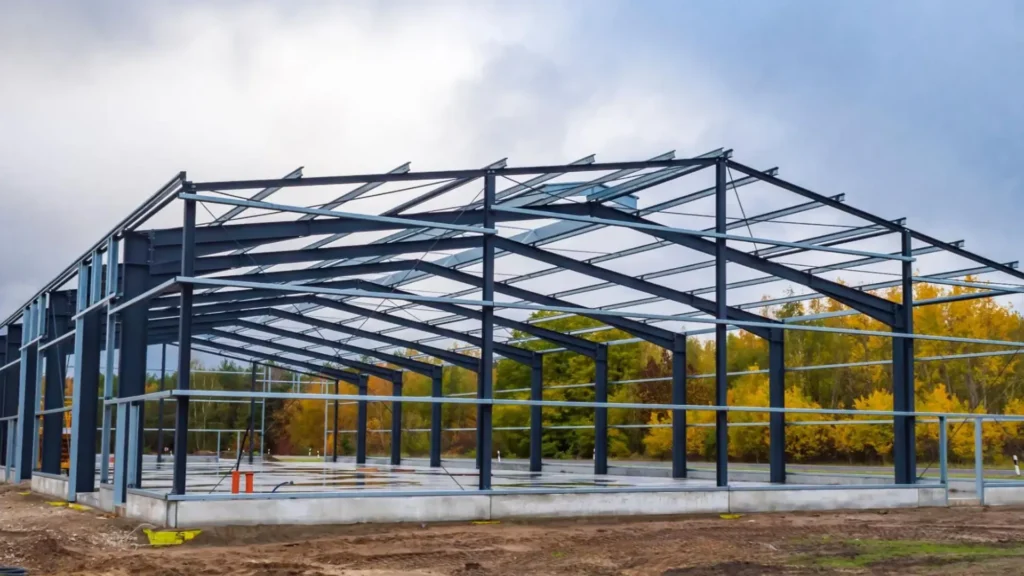
Current Structural Steel Pricing by Region
Structural steel pricing varies significantly across the United States based on transportation costs, regional fabrication capacity, local labor rates, and demand fluctuations. Here’s what contractors are seeing in major markets:
Northeast Markets (New York, Boston, Philadelphia):
Structural steel is currently priced in the range of 950 per ton, reflecting high union labor costs, significant demand from ongoing urban redevelopment, and the premium logistics associated with dense urban delivery. The New York market specifically has seen year-over-year increases of approximately 11 percent from 2024 to 2025.
Midwest Markets (Chicago, Detroit, St. Louis):
Pricing ranges from 880 per ton. The Midwest benefits from competitive fabrication capacity and somewhat lower transportation costs for projects in this region, though union labor rates in major metropolitan areas remain substantial. Chicago construction projects, in particular, command competitive pricing due to the concentration of experienced fabricators in the region.
Southeast Markets (Atlanta, Charlotte, Miami):
Pricing typically falls in the 900 per ton range. The Southeast has experienced steady growth in commercial construction and industrial development, creating increased demand. Labor costs tend to be more favorable in Southeast markets compared to the Northeast, though major urban centers like Atlanta command premium pricing.
Southwest and Texas Markets (Dallas, Houston, Phoenix, Las Vegas)
Pricing ranges from 850 per ton, generally representing some of the most competitive structural steel costs in the nation. The Southwest and Texas benefit from lower transportation costs relative to coasts, competitive regional fabrication, and lower prevailing wage requirements in non-union markets. However, Houston and Dallas major projects still incorporate premium labor costs.
West Coast Markets (Los Angeles, Seattle, San Francisco)
Pricing is typically in the 1,050 per ton range, reflecting high transportation costs for imported steel, expensive local labor, stringent environmental regulations, and significant demand from the region’s ongoing development boom. California projects in particular carry premium costs due to state prevailing wage laws and specific environmental compliance requirements.
Steel Rebar and Reinforcement Pricing
Reinforcement steel (rebar) used in composite steel-frame buildings with concrete floors has followed similar inflationary trends, currently priced at approximately 920 per ton in most markets, up from roughly $750 per ton in 2023. This increase directly affects projects that combine structural steel framing with concrete composite floor systems.
Market Volatility and Procurement Strategy
The structural steel market has demonstrated increased price volatility throughout 2024 and into 2025, influenced by:
Global iron ore prices: Prices have remained elevated relative to historical averages due to supply constraints and continued global infrastructure demand
Energy costs: Electricity and natural gas prices affect mill production costs and are passed through to material pricing
Trade policy and tariffs: Changes in tariff structures on imported steel and raw materials create pricing uncertainty
Regional fabrication capacity: Markets with limited local fabrication capacity may face supply delays and premium pricing
What Professional Steel Structure Estimating Services Include?
Comprehensive Steel Structure Estimating Services cover far more than a simple quantity takeoff and price multiplication. A professional estimate encompasses multiple distinct components, each of which feeds directly into your ability to bid competitively and execute profitably.
Detailed Structural Steel Quantity Takeoff
The foundation of any credible steel estimate is the quantity takeoff — a precise, systematic measurement and cataloging of every structural element in the project drawings. This includes:
- Wide-flange beams and columns (W-shapes, HP-shapes)
- Hollow structural sections (HSS tubes, circular and rectangular)
- Angles, channels, plates, and miscellaneous structural shapes
- Connection materials: gusset plates, clip angles, shear tabs
- Fasteners: bolts, nuts, washers, anchor bolts
- Welded studs (shear connectors for composite action)
- All miscellaneous reinforcement and embedded items
The takeoff process is not a simple count of members. Professional estimators account for:
Waste factors specific to the project’s member configurations
Mill-end cuts and material optimization required during fabrication
Connection complexity that affects how members interface with each other
Dimensional requirements that may necessitate specialty sizing or material grades
Installation and assembly methods that influence the final material list
For example, a moment frame connection system requires significantly more material — gussets, reinforcing plates, and additional bolting — compared to a simple shear tab connection. A professional takeoff captures these distinctions with precision, ensuring your material costs and fabrication pricing reflect the actual work required.
Fabrication Cost Estimation
Material costs typically represent only 25 to 40 percent of the total installed cost of structural steel. The majority of project costs derive from fabrication and erection — and fabrication costs, in particular, are far more complex than a simple weight-based calculation.
Fabrication encompasses every process that occurs in a fabricator’s shop:
Cutting and beveling: Using plasma, oxy-fuel, or saw systems to cut members to length and prepare weld edges
Drilling and punching: Creating bolt holes and other apertures with precision positioning
Welding: Applying shop welds for moment connections, stiffening plates, and connection assembly, with costs varying dramatically by weld type and quality requirements
Grinding and finishing: Preparing surfaces for painting and smoothing sharp edges and weld splatter
Fitting and assembly: Precisely positioning members during fabrication to ensure field fit-up
Quality control and inspection: Documenting work, performing inspections, and maintaining compliance with specification requirements
Priming and painting: Applying shop coatings and protective finishes per specification
Packaging and shipping: Preparing members for transport and arranging logistics to the job site
Fabrication costs are driven primarily by complexity, not weight. A column with eight welded bracket connections, multiple drilling operations, and complex stiffening plate geometry will cost significantly more per ton to fabricate than a simple beam with two bolted connections at the ends.
Professional estimators price fabrication based on:
Piece count: More individual members require more setup time, documentation, and handling
Weld length and type: Full-penetration welds require more labor, inspection, and material than partial-penetration welds; flux-core arc welding (FCAW) requires different pricing than gas tungsten arc welding (GTAW)
Hole and bolt requirements: The number of holes, their precision requirements, and bolting standards affect fabrication labor
Material grade and thickness: Different grades and heavier gauges require specialized handling and equipment
Connection configuration: Moment connections, semi-rigid connections, and simple connections carry dramatically different costs
Surface preparation and painting requirements: High-performance coatings or galvanizing add significant fabrication cost
Specialty requirements: Seismic certification, wind-resistant design, or architectural finishes elevate costs substantially
Steel Erection and Installation Costs
Steel erection — the on-site assembly and installation of structural steel frames — represents another major cost component and requires specialized expertise to estimate accurately. Erection is where design complexity, site logistics, labor rates, equipment availability, and schedule intersect to create costs that vary dramatically from project to project.
Steel erection involves:
Ironworker crews: Skilled labor performing connections, bolting, alignment, and installation
Crane operations: Positioning and operating mobile or tower cranes for lifts, including the cost of the crane itself, fuel, and the operator
Rigging equipment: Slings, spreader bars, lifting lugs, and other specialized rigging hardware
Bolting and connection: Completing field bolts and welds not performed in the shop
Alignment and leveling: Ensuring members are positioned to specification and building lines are maintained
Safety systems: Installing fall protection, guardrails, debris netting, and other safety infrastructure required by OSHA and local regulations
Temporary bracing: Installing temporary lateral bracing or shoring to maintain stability during partial occupancy states
Professional erection estimating requires developing a realistic erection plan that accounts for:
Building height and complexity: Taller buildings require taller cranes, longer cycles, and slower piece placement rates
Crane type and positioning: Mobile cranes, tower cranes, and derricks have different capabilities, costs, and positioning requirements
Piece count and picking sequence: More pieces require more crane cycles; complex sequences require more planning and slower execution
Connection complexity: Projects with extensive field welding or high-precision bolting require more ironworker labor and slower installation rates
Site access and staging: Dense urban sites with limited laydown areas, traffic restrictions, or night delivery windows increase costs
Schedule and phasing: Compressed schedules, weekend or night work, or phased erection (where the frame must remain partially open for extended periods) all increase costs
Geographic and climatic factors: Weather delays, seasonal restrictions (winter work, summer heat), and regional labor availability affect erection costs
The relationship between tonnage and erection cost is non-linear. A 20-story building does not cost twice as much to erect as a 10-story building because the per-ton cost increases significantly with height. Professional erection estimators develop detailed picking plans and labor schedules that capture these realities.
Miscellaneous Metals and Secondary Steel Systems
Structural steel proper is frequently only part of the metals scope on a project. Most commercial, residential, and industrial buildings include significant quantities of miscellaneous metals and secondary steel systems:
Metal decking: Composite floor deck, roof deck, and wall deck systems (these often represent substantial tonnage)
Steel stairs and platforms: Temporary stairs during construction and permanent stair structures
Handrails and guardrail systems: Safety railings throughout the structure
Grating and expanded metal: For landings, platforms, and industrial applications
Lintels and loose angles: Supporting masonry or non-structural infill
Embed plates and connection hardware: Numerous small items for building systems integration
Roof framing steel: Purlins, rafters, and secondary framing members
Ornamental and architectural steel: Specialty items for aesthetic purposes
Miscellaneous metals can represent 15 to 25 percent of total steel project value, yet they are frequently overlooked or estimated using rough allowances rather than detailed quantities. Professional steel estimating services ensure that miscellaneous metals are estimated with the same precision as primary structural members.
Material Optimization and Value Engineering
Beyond calculating what is in the drawings, professional estimators identify opportunities to reduce costs without compromising structural integrity, code compliance, or project requirements. This value engineering might include:
Suggesting alternative connection configurations that reduce fabrication labor while maintaining required load paths and performance
Recommending standard section sizes in place of specialty shapes, improving material availability and reducing lead times
Consolidating or eliminating unnecessary members where structural design flexibility permits, based on conversation with the structural engineer
Proposing alternative erection sequences that reduce crane time or improve picking efficiency
Identifying material grade optimization where lower-cost grades meet code and performance requirements
Suggesting shop assembly alternatives that reduce field labor and improve schedule
In a market where structural steel costs approach or exceed $900 per ton, even modest optimization — perhaps 2 to 3 percent in material or 5 to 8 percent in labor — produces meaningful savings on mid-to-large projects.
The Professional Steel Structure Estimating Process
Understanding how a professional estimating team approaches a structural steel project helps you set appropriate expectations for deliverables, turnaround times, and the level of detail you should receive in a completed estimate.
Phase 1: Document Review and Scope Definition
The estimating process begins with a thorough review of all project documents:
Structural drawings: Including general notes, details, connection schedules, and member designations
Specifications: Steel quality, grade requirements, coating systems, and fabrication standards
Geotechnical reports: Information about soil conditions and foundation requirements that may affect steel design
Building code requirements: Understanding applicable codes (International Building Code, local amendments, or project-specific standards)
Regulatory requirements: Zoning, DOB/permitting, environmental, or prevailing wage documentation
Architectural and mechanical drawings: To understand coordination with other building systems and scope boundaries
During this phase, the estimator:
- Identifies the complete scope of steel work and clearly defines what is included versus what falls under other trades (concrete, MEP, etc.)
- Clarifies any ambiguities in the drawings with the structural engineer or architect
- Establishes estimating scope boundaries to prevent scope creep or missed items
- Documents any assumptions that will affect the estimate
Phase 2: Detailed Quantity Takeoff and Material List Generation
Using professional estimating software (such as PlanSwift, Bluebeam, Tekla Structures, or similar), the estimator performs a systematic, detailed quantity takeoff:
Member-by-member measurement: Every structural element is individually measured, cataloged, and listed
Material list organization: Members are grouped by type, size, grade, and length for clear communication with fabricators
Waste factor application: Industry-standard waste factors (typically 5 to 8 percent) are applied to account for cutting optimization and material handling losses
Connection material listing: All bolts, welds, plates, and other connection components are listed and quantified
Cross-verification: The takeoff is reviewed against the structural drawings to ensure no items are missed
The result is a comprehensive bill of materials that becomes the basis for material pricing and fabricator quotations. This document is increasingly sophisticated estimating firms also serves as a basis for project documentation and material control during execution.
Phase 3: Fabricator and Vendor Quotations
Material costs are determined through actual quotations from local and regional steel fabricators, suppliers, and specialty vendors rather than relying solely on published databases. This phase typically involves:
Multiple fabricator quotations: Reaching out to 2 to 4 qualified fabricators for pricing on the proposed material list
Material supplier quotations: Obtaining quotes from mills, service centers, and material suppliers for raw material or pre-fabricated components
Specialty vendor quotes: Pricing for items such as shear studs, welds, specialized coatings, or custom components
Transportation and logistics: Including delivery costs specific to the project location and volume
Professional estimating firms maintain ongoing relationships with fabricators and suppliers, ensuring that quotations reflect current market conditions rather than outdated published rates. In periods of market volatility (like the present), this real-time pricing data is essential for accuracy.
Phase 4: Labor and Equipment Pricing
Labor costs are calculated based on detailed analysis of:
Applicable wage rates: Whether the project is unionized, prevailing wage, project labor agreement (PLA), or open shop; what the applicable rates are; and what fringes, benefits, and overtime apply
Crew composition: Determining realistic crew sizes for different types of work (ironworkers, crane operators, riggers, safety personnel, supervision)
Productivity rates: Based on project-specific conditions including building height, site access, connection complexity, and climate
Regional factors: Understanding how location-specific conditions (urban vs. rural, northern vs. southern, coastal vs. interior) affect labor productivity and costs
Specialty labor: Pricing for specialized roles such as welders certified for high-strength or seismic applications, or experienced crews for complex erection sequences
Equipment costs include:
Crane rental: Rates based on crane type, capacity, and duration of use
Rigging equipment: Slings, shackles, spreader bars, and lifting hardware
Temporary facilities: Temporary stairs, scaffolding, shoring systems, and safety equipment
Small tools and consumables: Bolts, welding wire, grinding consumables, and miscellaneous materials
Phase 5: Overhead, Insurance, and Contingency
A complete steel estimate includes appropriate loadings for:
General conditions: Supervision, site management, temporary facilities, and project overhead
Insurance and bonding: General liability, workers’ compensation, and project-specific insurance requirements
Contingency: A reasonable allowance for unknowns, typically 5 to 10 percent depending on design maturity and project risk
Profit margin: An appropriate markup based on project type, complexity, risk, and market conditions
Phase 6: Estimate Compilation and Delivery
The final estimate is delivered as a detailed document that provides full transparency into assumptions, quantities, and pricing. Professional deliverables typically include:
Executive summary: Total project cost, cost per ton, and high-level breakdowns
Detailed cost breakdown: Organized by work type (materials, fabrication, erection), trade, CSI division, or geographic area depending on client preference
Itemized quantities: A detailed list of all structural members, materials, and labor components
Assumption documentation: Clear notes on all assumptions, exclusions, and special conditions affecting the estimate
Market conditions summary: Information about steel pricing, labor rates, and other market factors at the time of estimate
Escalation and schedule notes: Information about pricing validity, escalation provisions, and timeline implications
Types of Steel Structure Projects Requiring Professional Estimating
The range of steel structure projects across the United States is extraordinarily diverse, and each project type carries its own unique estimating challenges, cost drivers, and technical considerations.
High-Rise Commercial and Office Towers
Commercial office towers in major metropolitan areas (New York, Chicago, Los Angeles, Houston, San Francisco, Boston, and others) represent some of the most technically complex structural steel projects. Estimating these projects requires expertise in:
Lateral load systems: Understanding the cost implications of moment frames, braced frames, buckling-restrained braces, tuned mass dampers, and outrigger systems
Progressive erection sequences: Planning how the structure will be erected in phases as concrete floors and other building systems progress
Crane logistics: Understanding how cranes will be positioned, climbed, or jumped as the building rises; and planning the logistics of material delivery to multiple stories
Connection complexity: Moment connections and other sophisticated connection designs that require extensive field work
Material delivery sequencing: Coordinating delivery of materials with erection timeline to minimize on-site storage while managing supply chain efficiency
Coordination with other trades: Understanding how structural steel erection interfaces with MEP systems, facade installation, interior construction, and other concurrent trades
Multi-Family Residential and Mixed-Use Buildings
The residential construction boom across the United States — particularly in growing markets like Austin, Denver, Phoenix, Charlotte, and Nashville — has created significant volume in mid-rise and high-rise residential projects using structural steel. These projects often combine:
Steel moment frame or braced frame primary systems to achieve the clear spans and flexible floor plans required for modern apartment layouts
Composite steel and concrete floors with metal decking, shear studs, and concrete topping
Light-gauge steel for interior non-structural framing and exterior wall systems
Mixed material systems where steel, concrete, and wood are integrated
Residential projects present unique estimating challenges related to repetition (many similar floor plates reducing per-unit costs but requiring careful coordination), schedule compression (residential projects are frequently on aggressive timelines), and the integration of mechanical, electrical, and plumbing systems within the structural frame.
Industrial and Warehouse Facilities
The explosion in e-commerce and logistics has driven unprecedented demand for warehouse and distribution facilities across the country. These projects typically feature:
Clear-span rigid frame systems that minimize interior obstructions (desirable for storage and operations)
High bay heights for vertical racking or equipment
Crane rail girders for material handling and equipment movement
Mezzanine structures for office and support space
Specialty systems for climate control, fire suppression, and material handling
Industrial projects often provide relatively straightforward estimating (simpler connections, repetitive members) but demand accurate understanding of:
Erection logistics: How materials will be staged, sequenced, and installed in projects that may cover many acres
Operational constraints: Understanding if the facility must remain partially operational during construction or if it can be completely shut down during erection
Site conditions: Soil conditions, drainage, wind exposure, and other environmental factors that affect cost
Renovation, Adaptive Reuse, and Historic Building Projects
Existing building renovation — adding floors, converting industrial lofts to residential, inserting new steel frames within historic structures, or upgrading systems in occupied buildings — presents unique estimating challenges:
Condition assessment: Understanding the capacity and condition of existing structural elements that must interface with new steel
Field connections to existing work: Connections between new and existing steel frequently require custom design and fabrication
Logistics in occupied buildings: Erection must often proceed around existing operations, with restricted hours, noise limitations, and strict safety protocols
Temporary supports and sequencing: Additional temporary bracing or support may be required to maintain stability as existing elements are modified
Site access constraints: Space for staging, crane placement, and material storage may be severely limited in dense urban environments or occupied buildings
Major Cost Drivers in Steel Structure Projects
When reviewing a steel estimate or preparing your own, understanding the primary cost drivers helps you evaluate reasonableness, identify optimization opportunities, and make informed value engineering decisions.
Steel Material Pricing and Market Conditions
Global and regional steel markets are influenced by:
Iron ore and scrap metal prices: Primary raw material costs that directly affect mill pricing
Energy costs: Electricity and natural gas expenses for mills are passed through to material costs
Mill capacity and utilization: Excess capacity drives competitive pricing; tight capacity supports higher prices
Import/export tariffs: Trade policies that affect the cost of imported steel or exported US material
Regional fabrication capacity: Markets with limited local fabrication may experience higher costs or extended lead times
Transportation costs: The cost and availability of trucking from mills or fabricators to project sites
In the current 2025 market environment, material costs have proven volatile, and forward procurement — locking in prices weeks or months in advance — has become a critical value management strategy.
Connection Design and Complexity
Connection type is among the largest controllable cost variables in structural steel estimating:
Simple shear connections: Relatively inexpensive; typically involving bolted clip angles or end plates with straightforward bolting
Semi-rigid connections: More expensive than simple connections; providing some moment resistance without full moment connection moment capacity
Full moment connections: Significantly more expensive; typically involving welded flanges and bolted webs, or specialty connection hardware
Seismic/special connections: Even more specialized and expensive; potentially incorporating dampers, friction devices, or other specialized hardware
The difference between a building frame designed with simple connections versus one with moment connections can be 30 to 50 percent in fabrication and erection costs per ton. This is a critical point where collaboration between the estimator, structural engineer, and owner during design can produce substantial project savings without compromising performance or safety.
Building Height and Vertical Transportation
Erection costs increase non-linearly with building height:
Single-story and low-rise buildings (1–4 stories): Erection costs are relatively modest, typically in the range of 400 per ton
Mid-rise buildings (5–15 stories): Erection costs increase substantially due to crane height requirements and slower lift cycles, typically in the range of 800 per ton
High-rise buildings (15+ stories): Erection costs continue increasing due to taller crane requirements, longer cycle times, and increased complexity, potentially reaching 2,000+ per ton
Other height-related cost drivers include:
Crane selection: Taller buildings require taller or longer-reach cranes, which are more expensive to rent and operate
Crane positioning: Limited space for crane positioning in urban areas increases costs
Lifting capacity: At extreme heights, some lifts may reach the limit of crane capacity, requiring multiple smaller lifts or specialized rigging
Material staging: Taller buildings require more sophisticated material storage and vertical transportation systems (hoists, elevators) for workers and tools
Schedule and Phasing Requirements
The project schedule has direct cost implications:
Compressed schedules: Requiring weekend or night work, multiple crane shifts, or accelerated material delivery increase labor and equipment costs
Seasonal restrictions: Winter work in cold climates may require heated sheds for bolting operations, slower productivity, and premium labor rates
Phased occupancy: If the structure must be partially occupied or operational while erection continues, temporary bracing, sequencing complexity, and working-hour restrictions increase costs
Extended erection timelines: While faster schedules cost more, excessively extended timelines increase overhead costs and potentially extend fabricator lead times
Understanding and documenting schedule assumptions in an estimate is essential, as schedule changes are among the most common sources of cost overruns on steel projects.
Coating Systems and Fire Protection
Steel coating and fire protection requirements vary based on building type, occupancy, exposure conditions, and local code requirements:
Shop primer only: Basic protection during fabrication and delivery; typically the minimum requirement
Field paint finish: Complete shop primer plus field painting to match architectural finishes
Galvanizing: Hot-dip galvanizing for exposed exterior steel or corrosive environments; significantly more expensive than paint but provides superior protection
Intumescent fireproofing: Fire-protective coatings that expand when exposed to heat, protecting steel from loss of strength at elevated temperatures; required by code for many building types
Specialty coatings: Epoxy, polyurethane, or other high-performance coatings for chemical exposure, moisture, or aesthetic requirements
Coating costs can represent 5 to 15 percent of total installed steel costs depending on the specifications. Professional estimates carefully account for specified coating requirements rather than using generic allowances.
Fabrication Complexity and Piece Count
As discussed earlier, fabrication costs are driven more by complexity than by weight:
Projects with simple connections and straightforward member configurations might fabricate at 1,200 per ton
Projects with moderate complexity (semi-rigid connections, welded brackets, specialty details) might run 1,800 per ton
Highly complex projects (moment connections, numerous fabrication operations, specialty finishes) might exceed $2,000 per ton
Understanding the specific complexity factors in your project is essential for evaluating whether a fabrication quote is competitive or out of line.
Site Conditions and Urban Logistics
Site-specific factors affect costs:
Dense urban sites: Limited staging areas, traffic restrictions, noise/vibration limitations, and night-only delivery windows increase costs
Remote or difficult-access sites: Limited infrastructure, extended transportation, and challenging working conditions increase costs
Weather exposure: Coastal sites with wind and moisture exposure, or high-altitude sites with cold weather, affect both costs and schedule
Existing infrastructure: Projects in areas with existing utilities, structures, or congestion require more careful planning and typically cost more
Choosing the Right Steel Structure Estimating Partner
Not all estimating services are created equal, and in a market as technically demanding as structural steel construction, choosing the right estimating partner can directly determine whether you win bids profitably or consistently find yourself either too expensive to compete or too thin to survive.
Deep Expertise in Your Market and Project Type
The most critical factor is experience with your specific project type in your region. An estimating firm should demonstrate:
Proven track record with projects of similar size, complexity, and type in the geographic markets where you work
Familiarity with local fabricators, erectors, and suppliers to ensure that quotations reflect current market conditions
Understanding of regional labor agreements, whether union or open-shop, and applicable prevailing wage requirements
Knowledge of local codes and regulations that affect project delivery and costs
Experience with the specific building types you typically bid (office, residential, industrial, etc.)
A national estimating firm with generic expertise may have sophisticated software, but without deep local knowledge, their estimates will require extensive local adjustment or risk significant errors.
Professional-Grade Estimating Software and Technology
Professional estimating requires:
Industry-standard software such as PlanSwift, Bluebeam, Tekla Structures, RSMeans with locality factors, or similar tools
Current market data from local suppliers, fabricators, and labor sources — not solely reliance on published databases that lag real-world conditions
Systematic processes for quality control, peer review, and error checking
The capacity to handle complex drawings and produce detailed, organized deliverables
Integration with your project management systems if you need ongoing estimate support and tracking
Reasonable Turnaround Time and Communication
Construction bidding moves quickly. You need an estimating partner who:
Can deliver detailed estimates within your required timeline — typically 48 to 72 hours for competitive bids, longer for design estimates and value engineering studies
Communicates clearly about scope, assumptions, and timeline
Is responsive to questions and change requests during the estimating process
Provides realistic timelines rather than overpromising and underdelivering
Transparent, Detailed Deliverables
A quality estimate is not a single number — it’s a detailed, traceable breakdown that you can review, understand, and defend to an owner or general contractor. Look for:
Itemized cost breakdowns by material, labor, equipment, and overhead
Clear documentation of assumptions and exclusions
Explanation of cost drivers specific to your project
Identification of risk areas or items requiring clarification
Alternative scenarios (different erection methods, phasing, or value engineering options) if requested
You should be able to review an estimate and understand not just what the total is, but why it is that amount and whether the components make sense for your project.
Capability for Value Engineering and Optimization
A high-quality estimating partner goes beyond calculating costs and identifies opportunities to optimize:
Material specifications and sizing for cost efficiency
Connection configurations that reduce fabrication labor
Erection methods and sequencing that improve efficiency
Schedule adjustments that reduce labor or equipment costs
An estimator who can suggest realistic ways to reduce costs — even 2 to 5 percent — adds significant value, particularly on larger projects where small percentages translate to substantial dollars.
Access to Specialized Expertise
Professional estimating firms that focus specifically on structural steel develop a depth of knowledge, industry relationships, and specialized capabilities that a single in-house estimator cannot match. This includes:
Current market pricing from ongoing relationships with suppliers and fabricators
Specialized knowledge of different project types, connection systems, and erection methods
Continuous professional development staying current with code changes, new technologies, and evolving industry practices
A network of industry contacts for specialized questions, secondary opinions, or problem-solving
Outsourced estimating firms also benefit from the collective experience of multiple estimators, providing peer review, quality control, and the ability to tackle complex or unusual projects with confidence.
Faster Turnaround on Competitive Bids
Professional estimating firms have the capacity to mobilize multiple estimators on a single project when required, compressing turnaround times without sacrificing accuracy. This capability is particularly valuable during peak bid seasons when multiple opportunities arrive simultaneously.
A firm with in-house estimating might be constrained by the availability of a single estimator. An outsourced partner can scale capacity to match your needs.
Reduced Risk of Costly Errors
A systematic, peer-reviewed estimating process with experienced professionals reduces the risk of errors that can erode margin or cause bid failures. Common errors include:
- Missed scope items
- Incorrect labor rates or wage escalations
- Outdated material pricing
- Underestimation of complexity factors
- Miscalculation of safety and overhead costs
Professional estimating firms have quality control processes, peer review standards, and documentation practices that catch errors before they reach your bid.
Scalability and Flexibility
As your construction business grows and takes on larger or more complex projects, an outsourced estimating partner scales with you. You gain access to:
The capacity for large, complex projects that might exceed your in-house resources
Flexibility to increase or decrease estimating volume with market demand
Specialization in your specific project types and markets
The ability to focus your internal resources on project execution rather than estimating
Common Mistakes in Steel Structure Estimating to Avoid
Even experienced contractors make systematic estimating mistakes on steel projects, and the financial consequences can be severe. Understanding the most common errors helps you evaluate incoming estimates critically and ensure your estimating process meets the standard of care your business requires.
Relying Solely on National Price Databases Without Local Verification
This is perhaps the most common and costly error in steel estimating. National databases like RSMeans publish city cost indices intended to adjust national averages to local conditions, but:
These adjustments are updated annually and can lag real-world market conditions by 6 to 12 months
Rapid inflation periods (like 2024-2025) reveal the inadequacy of annual updates to capture quarterly or monthly price changes
Local market variation within regions is often greater than national indices account for
Supplier availability and capacity fluctuate based on current market conditions that published indices don’t capture
An estimate built entirely on database pricing without verification from current supplier and fabricator quotations is a liability, not an asset. In the current market environment, building an estimate on 2024 indices when 2025 market conditions have changed materially is a recipe for bid failure.
Underestimating Erection Complexity and Labor
Many steel estimates apply a flat erection rate per ton without accounting for project-specific complexity factors that can easily double or triple actual labor costs:
Building height: A 20-story building is not twice as expensive to erect as a 10-story building; the per-ton cost is significantly higher
Connection complexity: Field bolting and welding requirements substantially affect labor costs
Site access constraints: Dense urban locations with limited staging and challenging logistics cost more than suburban sites with open space
Crane positioning: Limited crane placement options or multiple crane relocations increase costs
Weather and season: Winter work, coastal wind exposure, or high-altitude conditions affect productivity and costs
Schedule compression: Weekend or night work commands premium rates
On straightforward single-story warehouse erection, a flat-rate estimate might be defensible. On a multi-story building in an urban environment with complex connections and restricted access, a per-ton erection rate without complexity analysis is almost certainly wrong.
Missing or Underestimating Miscellaneous Metals Scope
Miscellaneous metals — stairs, railings, metal decking, lintels, and other secondary steel — can represent 15 to 25 percent of total project value. Estimates that focus narrowly on the primary structural frame and treat miscellaneous metals as a generic allowance or afterthought systematically underestimate costs.
Ignoring or Underestimating Procurement Lead Times
Current structural steel fabrication lead times in most US markets range from 8 to 16 weeks for standard members, with longer timelines for specialty items. An estimate that assumes immediate material availability without accounting for realistic fabrication schedules can create schedule conflicts and premium pricing pressures.
Additionally, extended lead times can create cascading effects: if steel delivery is delayed, it delays erection, which delays concrete placement, which delays interior construction.
Failing to Account for Regional Labor Rate Variations
Labor rates vary dramatically across the country, and even within regions, different project types (prevailing wage vs. open-shop, union vs. non-union) carry different rates. Using generic or outdated rates is a common source of estimate errors.
Not Updating for Escalation and Price Changes
Material and labor costs are volatile. An estimate completed months in advance of bidding may become inaccurate as prices change. Failing to escalate or update estimates for material and labor price movements introduces bias and error.
Inadequate Documentation of Assumptions
An estimate without clear documentation of assumptions is difficult to defend and prone to misinterpretation. Ambiguity about what is included, what is excluded, or what assumptions drive costs can lead to disputes, bid failures, or cost overruns.
Document all assumptions clearly, including material sources, labor rates, schedule, and any items excluded from scope. Make the estimate transparent enough that other people can review it and understand the underlying logic.
Conclusion
The structural steel construction market rewards precision and punishes guesses. With material costs approaching or exceeding 100 per hour, and regulatory requirements demanding documentation and compliance, the cost of an inaccurate steel estimate is never abstract — it shows up directly in project losses, failed bids, and damaged client relationships.
Professional Steel Structure Estimating Services — done right — are not a cost center consuming project resources. They are a competitive advantage that directly affects your profitability and market position.
A well-executed steel structure estimate gives you:
The confidence to bid aggressively on projects where you have genuine competitive advantage
The judgment to walk away from projects where the numbers don’t work
The accuracy to execute profitably when you do win
Clear documentation that protects you and your clients
Identification of cost optimization opportunities that improve overall project value
An estimate built on current market data, verified supplier and fabricator quotations, realistic labor productivity assumptions, and thoughtful consideration of project-specific factors delivers value far exceeding its cost.
Whether you are looking for professional Steel Structure Estimating Services for a single high-rise bid, ongoing estimating support for your structural steel business, or specialized services for complex renovation projects, partnering with an experienced, knowledgeable estimating team is one of the most valuable investments you can make in your construction business.