| $3.40–$5.88 | $30–$70 | $40–$80 | 50%+ |
|---|---|---|---|
| Per sq ft (NYC avg) | Per sheet (labor) | Hourly rate | Above national avg |
Let’s cut right to it: hanging sheetrock in New York City is not the same job it is anywhere else. You’re dealing with elevator freight restrictions, DOB inspections, co-op alteration agreements, brownstone horsehair plaster, and labor rates baked into one of the world’s most expensive real-estate markets. Quoting a job here using national averages is how contractors lose money — or lose clients.
This guide was built from current 2026 contractor data, borough-level labor surveys, and real bid sheets from NYC renovation projects. Whether you’re a seasoned drywaller building out your pricing sheet, or a homeowner trying to understand whether you’re being quoted fairly, these numbers give you an honest, precise foundation.
In high-cost metros like New York, expect to add 20–50% to national averages. Labor and permit costs drive this.
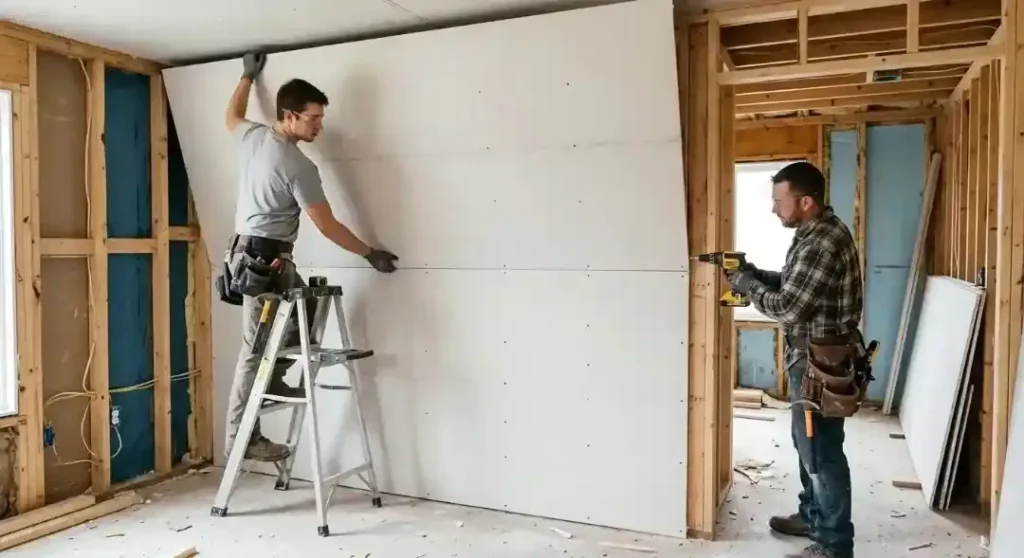
Why Sheetrock Costs More in New York?
New York is a category of its own in construction pricing. Before you look at any number in this guide, it helps to understand the structural reasons that drive costs up — and why any contractor who doesn’t account for them will consistently underbid.
Union Labor Premiums
Much of NYC’s commercial and large residential work is governed by union agreements through the Plasterers & Cement Masons Local 530 and related trades. Even non-union residential shops compete for the same skilled labor pool, which drives hourly wages significantly higher than the national median of $22–$23/hour.
Access & Logistics
Freight elevator availability, street parking restrictions, stairwell deliveries, and the sheer density of vertical living all add meaningful time to every job. A delivery that takes 20 minutes in suburban New Jersey can consume 90 minutes in a Manhattan high-rise — and that time is your money.
Building-Specific Rules
Co-ops and condominiums in NYC have alteration agreements that can require specific materials, licensed and insured contractors, work-hours restrictions (typically weekdays 9–5), and mandatory building superintendent sign-offs. Brownstones and pre-war buildings often have irregular framing, original plaster walls, and fire-stopping requirements that add scope.
NYC DOB Oversight
Opening walls, adding or removing partitions, or touching fire-rated assemblies in New York City typically triggers NYC Department of Buildings filing requirements — including architect drawings, permit fees, and scheduled inspections. These are real costs that belong in your quote.
The NYC Premium: Always Apply It
Across every data source we surveyed, NYC labor and total installation costs run 40–6f0% above national medians for comparable residential drywall work. This is not negotiable — it reflects the real cost of doing business here.
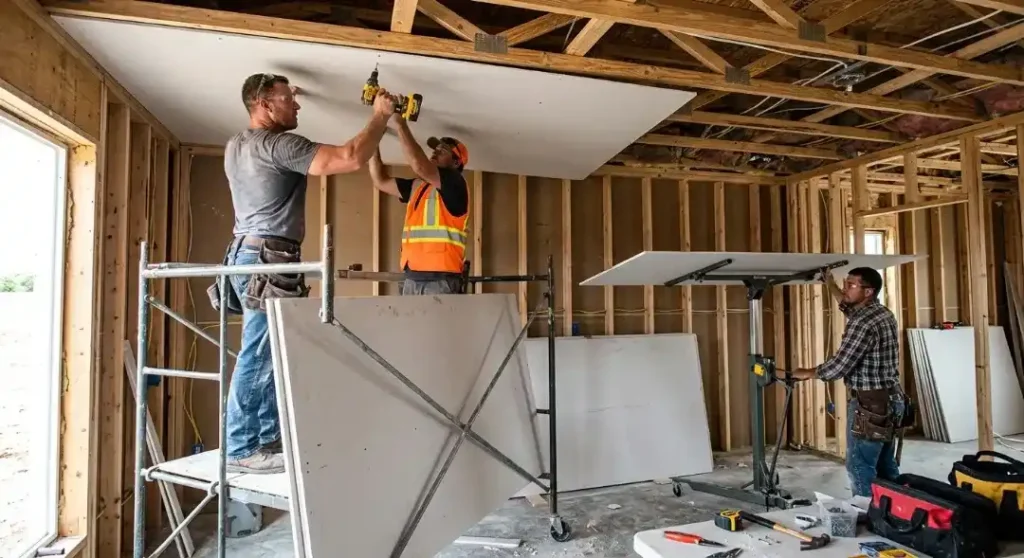
The Pricing Models Contractors Use
There is no single “right” way to charge for hanging sheetrock in New York. Professional contractors use three models — often in combination — depending on the job type, complexity, and their relationship with the client.
Per Square Foot (Most Common)
Per-square-foot pricing is the industry standard for larger residential and commercial drywall jobs. It scales naturally with scope, is easy for clients to compare across bids, and rewards efficient crews. NYC-specific rates for hanging alone (no finish) run $0.60–$1.10/sq ft, while fully finished work (hang + tape + mud + sand) runs $2.50–$6.00/sq ft depending on finish level.
Per Sheet
Some contractors — especially those doing repetitive residential work or working with a set crew on clearly scoped jobs — price by the sheet. This simplifies the estimate and aligns with how materials are purchased. Expect $30–$70 per sheet for hanging and finishing, with NYC-specific rates toward the upper half of that range.
Hourly Rate
Hourly billing works best for small repairs, oddly shaped spaces, historic plaster situations, or punch-list work where square footage doesn’t capture the real difficulty. NYC contractors run $40–$80/hour, with experienced finishers and union tradespeople reaching the upper end. Hybrid pricing — per sq ft for standard rooms, hourly for problem areas — is increasingly common on complex gut-renovations.
Use Hybrid Pricing on Complex Jobs
Quote standard rectangular rooms per sq ft. Quote bathrooms, closets, vaulted spaces, and historic rooms hourly. This protects your margins without alarming clients on the overall number.
The Full Per Square Foot Breakdown
The table below breaks down what you should charge at each stage of a sheetrock installation in the New York market, based on current 2026 data. These are labor-only rates unless noted.
| Scope of Work | National Rate | NYC Rate | Notes |
|---|---|---|---|
| Hanging only (labor) | $0.25–$0.50 | $0.60–$1.10 | No taping, no finishing. Open-framing only. |
| Taping & mudding (all 3 coats) | $0.50–$0.80 | $1.10–$2.50 | Level 4 ready. Includes tape, 3-coat mud. |
| Level 5 skim coat upgrade | $0.50–$0.80 add-on | $0.80–$1.20 add-on | Required for semi-gloss or high-sheen paint. |
| Hang + finish (Level 4, NYC) | $1.50–$3.50 | $3.40–$5.88 | Labor + materials, standard 1/2″ board. |
| Hang + finish (Level 5, NYC) | — | $4.50–$7.00+ | Premium finish, pre-war or luxury renovation. |
| Ceiling installation (NYC) | $1.50–$3.80 | $3.80–$6.50 | Add 20–40% over wall rates; scaffolding factor. |
| Drywall removal + disposal | $1.25–$3.25 | $2.50–$4.50 | NYC sanitation rules add disposal cost. |
Sources: Handoff.ai NYC data (2026), CountBricks labor database (Feb 2026), ConstructEM 2026 pricing guide, BrilliantRenovation NYC guide (2025). All figures reflect current market conditions including material and labor inflation.
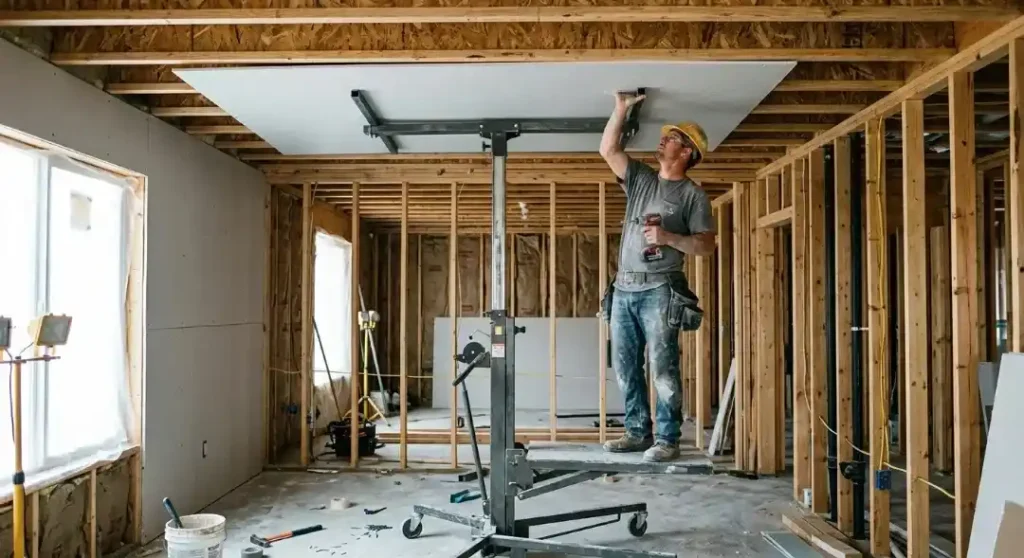
Borough-by-Borough Rates
New York City is not a monolith. Access difficulty, building stock age, clientele expectations, and local permit costs mean rates vary meaningfully across the five boroughs and the broader metro area.
| Manhattan | Brooklyn | Queens | The Bronx | Staten Island | Long Island / NJ |
|---|---|---|---|---|---|
| $4.50–$7.00 /sq ftHighest rates in the metro. Co-op alteration agreements, limited freight windows, and premium finish expectations on luxury renovations push prices to the top of the range. | $3.80–$6.00 /sq ftBrownstone gut-renovations dominate. Irregular framing, existing plaster, and strong demand for Level 5 finishes in neighborhoods like Park Slope and Carroll Gardens. | $3.40–$5.25 /sq ftMix of single-family and multi-family work. More accessible than Manhattan; rates track lower but above national averages due to NYC labor market. | $3.20–$5.00 /sq ftVolume of affordable housing rehabilitation work. Rates are the most competitive of the five boroughs while still well above national benchmarks. | $2.80–$4.80 /sq ftMost suburban feel in the metro. Better access, more single-family homes, slightly lower effective rates — but premium work commands full NYC pricing. | $2.50–$4.50 /sq ftIf you’re serving outer suburbs from a NYC base, factor in travel time and gas. Effective rates are lower but access is easier and no freight elevator issues. |
Don’t Underprice Manhattan Luxury Work
A Park Avenue or Tribeca renovation with Level 5 skim coat, 10-foot ceilings, and mandatory after-hours work prohibition is worth $6–$8+ per sq ft all-in. Know your market — high-end NYC clients rarely make decisions on price alone, but they will remember a sloppy finish forever.
Finish Levels & What to Charge
The Gypsum Association defines five finish levels for drywall — and in New York, the level your client needs (or expects) makes a dramatic difference in your labor cost and what you should charge. Here’s a clear breakdown for the NYC market.
| Level 0 — Fire Code Only | Level 1 — Fire-Taped | Level 2 — First Skim | Level 3 — Texture Ready | Level 4 — Paint Ready (NYC Standard) | Level 5 — Premium / Luxury |
|---|---|---|---|---|---|
| $0.60–$1.10 /sq ftLabor onlyBare board hung but not taped. Used in concealed spaces, temporary walls, or where final finish hasn’t been decided. Uncommon in NYC residential. | $1.10–$1.80 /sq ftTape embedded in compound at joints and inside corners. No finishing. Used in attics, service corridors, and mechanical spaces. | $1.50–$2.20 /sq ftOne coat of compound over tape, fasteners, and beads. Used in garages, warehouses, or as a base for tile. Rare in NYC finished living spaces. | $2.00–$3.20 /sq ftTwo coats over accessories and fasteners, sanded. Ready for heavy or medium-texture finishes and flat or eggshell paint. Common in NYC rental renovations. | $3.40–$5.88 /sq ftThree coats, fully sanded. Ready for flat paint. The baseline expectation for most NYC residential renovations. Specify this as your default unless discussed otherwise. | Custom PricingSkim coat over entire surface for a perfectly smooth finish. Required for high-gloss paint, luxury interiors, and critical lighting conditions. Highest labor and material cost. |
Full skim coat over Level 4 finish. Required for semi-gloss, high-gloss, or metallic paints. Standard in Manhattan luxury co-ops, pre-war brownstones, and high-end condos.
$4.50–$7.00+ /sq ft
Many buildings in Manhattan and prime Brooklyn neighborhoods effectively require Level 5 by the time their paint and lighting expectations are applied. Always discuss finish level during your initial scope meeting — not after the mud has dried.
Room-Type Pricing Guide for NYC
Different rooms carry different complexity premiums. A bathroom in a pre-war Upper West Side apartment is not the same job as a large open living room in a new Queens condo — even if the square footage is similar.
| Room Type | NYC Rate Range | Why It Varies |
|---|---|---|
| Standard bedroom (NYC) | $3.40–$5.00 /sq ft | Straightforward layout. Rate reflects NYC labor baseline. |
| Open living / dining area | $3.00–$4.50 /sq ft | Larger sheets, fewer cuts, more efficient — slight discount applies. |
| Kitchen | $4.00–$6.00 /sq ft | Moisture-resistant board, many cuts around cabinets and fixtures, higher finish standard. |
| Bathroom | $4.50–$7.00 /sq ft | Requires cement board or moisture-resistant board, extreme cutting complexity, small space = more time per sq ft. |
| Ceiling (standard height) | $3.80–$6.00 /sq ft | Overhead work is harder and slower. Factor in ceiling board and sometimes scaffold rental. |
| High ceilings (10–12 ft+) | $5.00–$8.00 /sq ft | Requires scaffold or lift rental, larger sheets, more joint work, and physical difficulty premium. |
| Stairwell | $6.00–$9.00 /sq ft | Extreme access difficulty, angled cuts, safety challenges. Price accordingly. |
| Full apartment gut-renovation | $4.00–$6.50 /sq ft total | Volume discount may apply on large jobs (1,000+ sq ft), but NYC logistics eat margin fast. |
Materials Costs in 2026
Material costs are a real part of your quote. New York’s delivery logistics — truck-delivery fees, elevator operator tips, extra hands for stairwell carries — add to the sticker price from the supplier. Here’s what you’re working with in 2026.
| Material | National Price | NYC Effective Price | Notes |
|---|---|---|---|
| Standard 1/2″ drywall (4×8 sheet) | $10–$14 | $12–$18 | Bread-and-butter board. Most wall applications. |
| 5/8″ Type X fire-rated (4×8) | $13–$17 | $16–$22 | Required in garage ceilings, shared walls, multi-family. |
| Moisture-resistant (green board) | +25–30% over std | $14–$20 | Kitchens, bathrooms, below-grade applications. |
| Mold-resistant (purple board) | +35–45% over std | $16–$24 | High-humidity areas, renovations following water damage. |
| Joint compound (5-gallon bucket) | $18–$28 | $22–$32 | Factor one bucket per 200–250 sq ft of wall surface. |
| Drywall screws (1 lb) | $6–$10 | $8–$12 | Don’t underestimate — a 500 sq ft job goes through 3–4 lbs. |
| Paper tape (500 ft roll) | $4–$6 | $5–$8 | Standard; fiberglass mesh tape costs slightly more. |
| Corner bead (per linear ft) | $0.50–$1.20 | $0.80–$1.80 | Count every outside corner in your scope carefully. |
NYC Delivery Surcharges Are Real
Factor $150–$350 in delivery fees for Manhattan and high-rise Brooklyn jobs. Suppliers charge for truck size limitations, COI requirements, and elevator scheduling. Build this into your material markup — 10–20% over your supplier cost is standard in New York.
Factors That Change Your Rate
No two NYC sheetrock jobs are identical. These are the factors that should move your quote meaningfully up or down from your baseline rates.
Factors That Increase Your Rate
- Ceilings over 9 feet — scaffold rental, longer lift time, heavier sheets overhead
- Fire-rated assemblies (Type X 5/8″ board) — heavier material, specific fastener spacing
- Historic buildings — irregular stud spacing, plaster removal, hidden surprises behind walls
- Tight spaces (bathrooms, closets, stairwells) — more cuts, more time per sq ft
- Elevator scheduling restrictions — extra crew hours lost waiting for freight access
- Weekend or off-hours work required by building management — 25–50% labor premium
- Asbestos or mold abatement needed first — separate specialist scope, plus your delay cost
- Level 5 skim finish — adds $0.80–$1.20/sq ft in NYC
- Specialty board (moisture, fire, sound) — 25–45% material premium
Factors That May Reduce Your Rate
- Large open-plan spaces with minimal cuts — more efficient per sq ft
- New construction with perfectly plumb, level framing — faster hanging
- High volume / repeat client relationship — loyalty pricing is reasonable and builds a book of business
- Easy ground-floor or low-rise access with direct truck delivery
- Client providing materials — be careful here; it shifts liability and scheduling risk to them
The Hidden Cost of Asbestos & Lead
New York buildings constructed before 1978 may contain lead paint; those built before 1986 may have asbestos-containing joint compound or texture coatings. Always note in your contract that your scope is contingent on clean walls. Abatement typically costs $1,000–$3,000+ and is a completely separate contractor’s work. If you find it, stop work and document immediately. Section 09
NYC Permits, DOB, and What You Need to Know?
This is where New York dramatically differs from the rest of the country — and where contractors get in trouble. Drywall work that’s no-permit-required in most of America often requires DOB filing in New York City.
When a Permit Is Required
In New York City, you’ll need DOB permits when the sheetrock work involves: creating or removing partitions that change the legal layout of a unit (which triggers occupancy and egress review); touching fire-rated assemblies or fire stops; structural modifications of any kind; or work that opens walls to modify plumbing or electrical systems behind them. Permit type varies — minor non-structural alterations typically require an Alt 2 or Alt 3 filing, while layout changes affecting occupancy require an Alt 1 with a new or amended Certificate of Occupancy.
When Sheetrock Work Is Typically No-Permit
Like-for-like replacement of damaged drywall (patching), hanging new board in an existing room without changing its dimensions or function, and cosmetic finishing work generally do not require DOB permits in NYC. However — and this is important — co-ops and condos have their own alteration agreement requirements that may be stricter than the DOB. Always check the building’s management office before starting work.
Don’t Work Without Verifying Building Rules
NYC co-op and condo buildings can require: proof of general liability ($1M+ per occurrence), workers’ comp certificates, an approved contractor list, a pre-work walk-through with the building super, and floor protection compliance. Pull these requirements at the bid stage, not the morning of your start date.
Permit Cost Ballpark
NYC DOB filing fees for an Alt 2 alteration start around $280–$500 for small residential work, but total permit costs including architect/expediter fees typically run $1,500–$5,000 or more for anything involving layout changes. These costs belong in the client’s budget, not buried in your bid — list them as a separate line item.
How to Write a Professional Quote in NYC?
The way you present your pricing is as important as the number itself in New York’s renovation market. High-net-worth co-op boards and sophisticated Brooklyn brownstone owners make decisions based on professionalism, detail, and clarity — not just the bottom line.
What Your Quote Must Include
- Total square footage of each room with your measurement methodology stated
- Finish level specified (Level 0–5) — never leave this ambiguous
- Board type and thickness specified (1/2″ standard, 5/8″ Type X, moisture-resistant, etc.)
- Labor line items separated from material costs
- Ceiling work called out separately at the ceiling rate premium
- Permit and expediting costs as a distinct line (owner’s responsibility or yours — clarify)
- Disposal and debris removal (NYC carting fees are real — don’t absorb them silently)
- Access/logistics assumptions stated (e.g., “freight elevator available weekdays 9am–4pm”)
- Exclusions clearly listed (paint, priming, framing, electrical behind walls)
- Payment schedule: 30–40% deposit, 30% at substantial completion, balance on walkthrough
Contractors who clearly explain their pricing method upfront build better client relationships and have fewer payment disputes.
Sample NYC Quote Structure
| Line Item | Qty | Rate | Total |
|---|---|---|---|
| Living/dining room — hang + Level 4 finish, 1/2″ std board | 380 sq ft | $4.80/sq ft | $1,824 |
| Bedroom — hang + Level 4 finish, 1/2″ std board | 210 sq ft | $4.80/sq ft | $1,008 |
| Kitchen — hang + Level 4 finish, moisture-resistant board | 140 sq ft | $5.40/sq ft | $756 |
| Ceiling (full apartment) — hang + Level 4 finish | 290 sq ft | $5.50/sq ft | $1,595 |
| Level 5 skim coat upgrade (living/dining + bedroom) | 590 sq ft | $0.90/sq ft | $531 |
| Delivery surcharge (Manhattan building, freight elevator) | 1 | $280 | $280 |
| Debris removal and disposal | 1 | $350 | $350 |
| Total Project Estimate | $6,344 | ||
Sample only — based on a Manhattan 2BR/1K gut renovation, Level 4 with Level 5 upgrade in main living areas. Permit costs not included (owner’s scope). Priming and painting excluded.
Frequently Asked Questions
What’s the difference between Sheetrock and drywall?
Sheetrock is a brand name owned by U.S. Gypsum — the “Kleenex” of the drywall industry. In practice, contractors and clients in New York use the terms interchangeably. Sheetrock panels may cost slightly more than generic gypsum board, but both serve the same structural and finish functions. When clients ask for “Sheetrock,” they generally mean standard 1/2″ gypsum board.
How much does it cost to drywall a 1,000 sq ft NYC apartment?
Based on current 2026 NYC rates, a full drywall installation (hang + Level 4 finish) in a 1,000 sq ft NYC apartment typically runs $3,400–$5,880, including materials and labor. Add $500–$1,000 for Level 5 skim coat if required. Ceiling work, delivery surcharges, and disposal bring total project costs to $4,500–$7,500 for a full apartment renovation scope.
Is per-sheet or per-square-foot pricing better for NYC jobs?
Both work, but per-square-foot pricing is more standard and easier for clients to evaluate across competing bids. Per-sheet pricing can leave money on the table in complex rooms where a sheet takes 45 minutes to cut and install versus 12 minutes in an open room. Use per-sheet pricing mainly on straightforward, open-plan work; per-sq-ft or hourly for anything with high cut complexity.
Do I need a license to hang drywall in New York City?
New York City requires contractors performing work valued at over $200 to be registered with the NYC Department of Consumer and Worker Protection as a home improvement contractor. General contractors must also be licensed. While drywall installation itself doesn’t require a specialized trade license, operating as an unregistered contractor in NYC is illegal and can result in significant fines. Always carry your HIC registration and appropriate insurance certificates.
How long does it take to hang sheetrock in a typical NYC apartment?
A 4-person crew can hang 45–80 sheets per day in favorable conditions — enough to cover 1,500–2,500 sq ft of wall and ceiling surface. A full NYC apartment renovation (1,000–1,500 sq ft of board) typically runs 3–5 days for hanging and first coat, plus 2–3 additional days for finishing coats, sanding, and clean-up. Building access restrictions often extend timelines — factor in elevator scheduling delays.
Should I charge more to hang drywall on ceilings?
Absolutely, yes — and confidently. Ceiling work in NYC should be priced 20–40% higher than comparable wall work. The physical difficulty of overhead installation, the need for a drywall lift or scaffold (add $40–$60/day rental), the higher risk of injury, and the fact that ceiling imperfections catch light far more harshly than wall imperfections all justify the premium. Never quote ceilings at wall rates.
How do NYC contractors handle change orders on sheetrock jobs?
Get change orders in writing, always — especially in NYC where co-op boards and management companies may revisit scope mid-project. Standard change order practice is to quote the additional work in writing, get client signature, and add time to the schedule if needed. A typical NYC change order markup is 15–25% over direct cost for small additions. Don’t let verbal approvals accumulate into a billing dispute at project close.
Conclusion
Now that you know what the market looks like, the next step is a detailed site visit and measurement. Every New York job has unique access, finish, and code considerations that only a walk-through can capture.
NYC Drywall Pricing Sheetrock Costs 2026 Hang Drywall New York Drywall Labor NYC Level 5 Finish NYC Manhattan Renovation Cost Brooklyn Drywall Contractor NYC Contractor Pricing Guide
Data compiled from Handoff.ai NYC construction cost database, Count Bricks labor rate database (Feb 2026), Construct EM 2026 drywall labor guide, Brilliant Renovation LLC NYC guide, Home Advisor/Angi 2026 data, and Drywall calculator.net 2026 pricing. Rates reflect current NYC metro market conditions and may vary by specific location, building type, and project scope.